

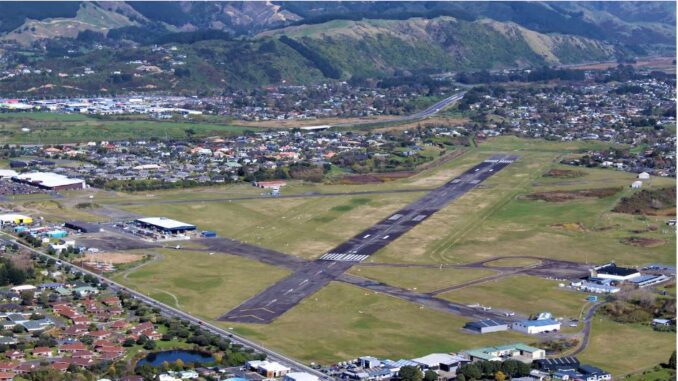
Former Kāpiti Councillor and social issues commentator Gwynn Compton has weighed in on the latest should we/shouldn’t we debate relating to Kāpiti Airport.
“As the usual cycle of Kāpiti Airport drama unfolds in the lead-up to this year’s election, it’s worth asking a more uncomfortable question: not simply whether the airport can be saved, but whether it’s worth saving in its current form and, if so, who should pay for that public value,” says Compton.

Compton says for some, it’s a key piece of strategic infrastructure that underpins economic growth and regional resilience, which once it’s gone it’s lost forever. For others, it’s an under-utilised piece of land housing an airport operating on life support, and whose redevelopment is long overdue.
Mayor Janet Holborow says Council backs the future of Kāpiti Coast Airport. She says Council has rejected claims it supports the closure of Kāpiti Coast Airport, reaffirming its long-standing support for retaining air services in the district, regardless of who owns the land.
Mayor Holborow says the Council sees a long-term future for the airport and remains committed to supporting its continued operation.
“The airport is an invaluable asset for Kāpiti and is critical to the district’s growth and resilience. We remain committed to working with the landowners and doing what we can to help ensure it remains in operation,” Mayor Holborow says.

Compton says underscoring the debate is one side sees the airport as strategic infrastructure: regional air access, emergency resilience, business connectivity, tourism, general aviation, and long-term optionality. Kāpiti Coast District Council’s public position is that it supports retaining air services and sees the airport as important for growth, resilience, business links, visitor economy, and civil defence, a position largely mirrored by Greater Wellington Regional Council.
“The other side starts from the ownership and economics: the airport is privately owned, and the owner/operator says the airport is losing about $815,000 a year and provides a poor direct return to the local economy through visitor spending,” says Compton.
He says the key tension is this, “even if the airport creates public value, does it create enough to justify keeping a large, centrally located site in aviation use versus other possible uses or ways to provide that public value?”
Mayor Holborow says the Council was not in a position to purchase the airport, but would use the levers available to it, including advocating to central government where needed, to help keep the airport viable and attractive to future owners.
She says strong air connections are important for Kāpiti’s economy, visitor sector, community connectivity, and wider regional resilience.
“We have a vibrant local economy, with strong innovation and business success. Air links between Kāpiti and our largest city are critical to business growth and the wellbeing of our visitor economy,” Mayor Holborow says.
Compton says there is also a political accountability question here. “Our local MP Tim Costley has been highly vocal about the need to save the airport, including fronting a National Party petition calling on people to ‘Save Kāpiti Airport’ and warning against someone ‘from out of town shutting it down and trying to chop it up’. Recent media coverage has also framed him as trying to stop a possible sale to developers who would only buy the land if the airport closed.”
However Compton says if the airport is truly a regional resilience asset, a health-sector backup, and a piece of infrastructure of wider Wellington significance, then the pressure cannot sit with Kāpiti Coast District Council.
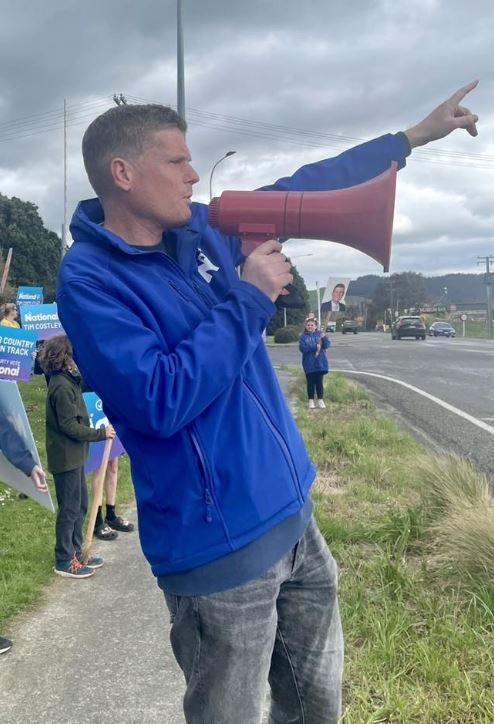
“Costley is not just a local advocate; he is a MP from one of the governing parties of the Coalition. That means the obvious question is what, specifically, his own Government is prepared to do, and whether he is prepared to publicly demand action from Coalition ministers with the same force he has directed at Kāpiti Coast District Council.”
Compton says it is easy enough for a local MP to demand that Kāpiti Coast District Council act. The harder test is whether a Government MP is willing to ask the same of his own Government’s ministers.
Mayor Holborow also addresses the wider politics in play. “The airport also plays an important role in connecting whānau and friends, and in supporting the Wellington Region Civil Defence and Emergency Management Plan – it is listed in Greater Wellington’s proposed change 1 to the Regional Policy Statement for the Wellington Region as a regionally significant infrastructure.”
Compton says ultimately, the question is not whether people like the idea of Kāpiti having an airport. “Many clearly do. The big question is whether the public value of keeping it is strong enough, specific enough, and irreplaceable enough to justify the cost, especially when compared with the potential of complete redevelopment. And, if it is, whether anyone with the power and capital to save it is willing to put real money and real accountability behind that claim. Until that happens, the debate will keep circling the runway, never quite coming in to land.”
Full report by Gwynn Compton is at: https://localaotearoa.substack.com/p/why-the-kapiti-airport-debate-keeps